


Nature Notes
Why do rattlesnakes rattle and hummingbirds hum?
How do flowers market themselves to pollinators?
Why do tarantulas cross the road?
Nature Notes investigates questions like these about the natural world of the Chihuahuan Desert region and the Llano Estacado every week. Through interviews with scientists and field recordings, this Marfa Public Radio original series reveals the secrets of desert life.
Join host Dallas Baxter on Tuesdays and Thursdays at 7:45 am during Morning Edition and 4:45 pm during All Things Considered. New episodes premier on Thursdays and replay on Tuesdays. Episodes are written and produced by Andrew Stuart and edited by Marfa Public Radio and the Sibley Nature Center in Midland, Texas.
-
 Montezuma quail are an avian conundrum. They’re among the most visually stunning birds in Far West Texas: The males have sky-blue bills, black-and-white striped faces and chestnut bellies covered in white polka dots. But they’re also masters of concealment. You could spend a lifetime here and never see one.
 -
 Robert Anderson, a senior research scientist at the Canadian Museum of Nature, has journeyed from South America to Southeast Asia studying this group of insects. And in our region, he’s discovered creatures previously unknown to science, including some found nowhere else on Earth.
 -
 An interstate might seem an arbitrary boundary. But an attentive West Texas traveler driving north of Interstate 10, on Highway 54 from Van Horn to the Guadalupe Mountains, can see they’ve entered a different landscape.
 -
 How can we limit our contamination of other planets? And how can we prevent bringing potentially harmful life forms back home? To address those questions, scientists have turned to an unlikely place: Carlsbad Cavern.
 -
 On April 25th, Alpine’s Front Street Books hosts an event to celebrate the publication of “Wild Women for Good,” from Texas A&M University Press.
 -
 PJ woodlands are the Southwest’s dominant forest type, covering 100 million acres here. Pinyons typically top out at 20 feet – and alongside diverse junipers, they thrive in dry, rocky places where Ponderosas, firs and aspens can’t make it.
 -
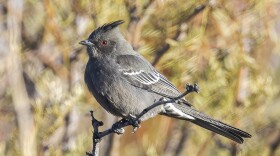 West Texas avians have passionate local advocates. That includes Trans-Pecos Bird Conservation, or TBC. This small but potent cadre of bird experts is cultivating the bonds between our region’s birds and its people.
 -
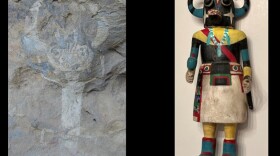 Kachina dolls are an iconic Indigenous art form. Their craftsmanship is striking, and non-Native people have long admired and sought to acquire them. But they’re just one element in an encompassing religious outlook.
 -
 Dr. Rachel Laker, of Hanover College in Indiana, specializes in taphonomy, which explores the processes bones undergo between an animal’s death and fossilization. Big Bend National Park is one site of her research.
 -
 Painted on cave walls where the Pecos and Devils rivers join the Rio Grande, the rock art of the Lower Pecos canyonlands casts a powerful spell. Its imagery is intricate, depicting human-like figures with upraised arms, geometric forms and animals like snakes, birds and mountain lions. And its scale is vast. Some panels span a hundred feet or more, and there are hundreds of such sites.


